
Outlining the western boundary of Sunderban Tiger Reserve of West Bengal, are Matla and Bidya Rivers. The eastern boundary of the reserve coincides with the international border of Bangladesh. It has been declared as a biosphere reserve, is also one of the World Heritage Sites in India and comes under 'Project Tiger' also. Sunderban National Park of India is made up of a variety of forests, such as the mangrove scrub, littoral forest, salt water mixed forest, brackish water mixed forest, wet forest, wet alluvial grass forest, etc.
Flora
 Sundarbans Wildlife Sanctuary of West Bengal comprises of 64 species of
plants, in toto. Due to tidal effects, these plants can easily endure
estuarine conditions and saline barrage. The months of April and May see
the emerald islands of the park being covered with red leaves of the
Genwa. Adding more color are the red flowers of Kankara and the yellow
blooms of Khalsi. The plants and trees commonly found here include
Genwa, Dhundal, Passur, Garjan, Kankra, Sundari and Goran.
Sundarbans Wildlife Sanctuary of West Bengal comprises of 64 species of
plants, in toto. Due to tidal effects, these plants can easily endure
estuarine conditions and saline barrage. The months of April and May see
the emerald islands of the park being covered with red leaves of the
Genwa. Adding more color are the red flowers of Kankara and the yellow
blooms of Khalsi. The plants and trees commonly found here include
Genwa, Dhundal, Passur, Garjan, Kankra, Sundari and Goran.Wildlife
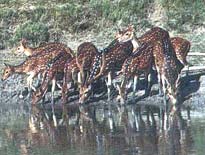
Sunderbans Tiger Reserve of West Bengal serves as the natural habitat of more than 400 tigers. Other wild animals found at the reserve include Chital Deer, Rhesus Macaque, Jungle Cat, Fishing Cat, Wild Boar, Common Grey Mongoose, Fox, Flying Fox, Pangolin, etc.
Reptiles
Sundarbans Wildlife Sanctuary of West Bengal is well known for the conservation program carried out in relation to the Oliver Ridley Sea Turtle. The other reptiles found at the park consist of King Cobras, Rock Pythons, Water Monitors, River Terrapins, Sea Snakes, Dog Faced Water Snakes, Green Turtles, Estuarine Crocodiles, Chameleons, Salvator Lizards, Hard Shelled Batgun Terrapins, Russell's Vipers, Mouse Ghekos, Curviers, Hawks Bill Turtles, Common Kraits, Chequered Killbacks, Rat Snakes, etc.
Aqua Fauna
The aqua fauna of the Sunderban National Park comprises of Star Fish, Saw Fish, Butter Fish, Silver Carp, Common Carp, Electric Rays, King Crabs, Red Fiddler Crabs, Hermit Crabs, Prawn, Gangetic Dolphins, Shrimp, Skipping Frog, Common Toad, Tree Frog, etc.
Birds
The popular birds of Sundarbans Wildlife Sanctuary are Pheasant Tailed Jacanas, Red Jungle Fowls, Open Billed Storks, Cotton Teals, Herring Gulls, Spotted Billed Pelicans, Swamp Partridges, Marsh Harriers, White Ibis, White Eyed Pochards, Black-Tailed Godwits, Peregrine Falcons, White Bellied Sea Eagles, Paradise Flycatchers, Night Herons, Gray Herons, Caspian Terns, Golden Plovers, Pintails, Common Snipes, etc.
How to Reach Sundarbans National Park
By Air: At 112 km, Kolkata airport falls the nearest to Sundarbans
By Rail: The nearest railway station is the one situated at Canning.
By Road: Road transportation is easily available for all the cities falling near Sundarbans.
By Water: Since one can reach the core of Sundarbans only through waterways, motor launch facilities are easily available.

