
By the end of the 9th century, the Cholas firmly established their empire and exercised control over the south of India. This was during the reign of Rajaraja and his son Rajendra l. They were very ambitious rulers and defeated the Pandya and the Cheras of the south and captured their kingdoms. They had trade relations with west Asia, China and Southeast Asia that aided in enormous development of cities during the 11th century. Architecture and art was at its peak during the reign of the Cholas. The local administration system of the Cholas was amazing and reminds us of the modern day Pahchayati raj.
Culture and Society
 There were many developments in the culture and society during the
Chola Empire. The main center for cultural and social gatherings was the
temple. The temple was an institution in itself. The temple courtyard
functioned as a school where students were taught the ancient Vedas and
Holy Scriptures. The temples were built in the form of citadels where
people could feel safe during an attack or aggression. The society was
divided into Brahmins and non-Brahmins. This was the time when Bhakti
cult emerged and Lord Shiva was worshipped as a symbol of fertility.
Language developed immensely and many languages like Tamil, Kannada and
Telugu were developed from Sanskrit.
There were many developments in the culture and society during the
Chola Empire. The main center for cultural and social gatherings was the
temple. The temple was an institution in itself. The temple courtyard
functioned as a school where students were taught the ancient Vedas and
Holy Scriptures. The temples were built in the form of citadels where
people could feel safe during an attack or aggression. The society was
divided into Brahmins and non-Brahmins. This was the time when Bhakti
cult emerged and Lord Shiva was worshipped as a symbol of fertility.
Language developed immensely and many languages like Tamil, Kannada and
Telugu were developed from Sanskrit. Architecture and Art
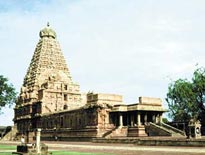
Architecture developed rapidly under the Chola Empire. The temples that were constructed were magnificent to look at. A famous one is the Brihadeeswarar Temple at Tanjore. They formed the cult of Dravidian style of temple architecture. These splendid temples can be still seen at Tanjore and are a living testimony to the intricate style of architecture of the craftsmen of Chola dynasty. Another famous form of art was the bronze figurines that were crafted during this time. The craftsmen used to beautifully decorate the statues with garlands and jewelry while carving the statue itself. Famous examples of bronze statues are the Nataraja and Lord Shiva as Ardhanarishwara.

