
According to the evidence found, it looks like people in ancient India were great admirers of different art forms. They loved fine arts and indulged in dancing, sculpting and painting. A very interesting aspect of ancient art in India is that it is highly realistic. Though bit crude, the anatomical detailing in their sculptures is worth applauding for. Animal and human figures have been carefully carved and chiseled to get a refined effect and portray the physical details in a very fine way.
 The fine artistic sensibilities of the people are pretty much evident
in their terracotta and bronze sculptures. From the artifacts another
interesting aspect that has come to light is the fact that musical
instruments were used at that point of time. Certain seals and
sculptures have inscriptions marked like instrument that looks somewhat
like the harp. The paintings and inscriptions basically reveal the
mental patterns of the people.
The fine artistic sensibilities of the people are pretty much evident
in their terracotta and bronze sculptures. From the artifacts another
interesting aspect that has come to light is the fact that musical
instruments were used at that point of time. Certain seals and
sculptures have inscriptions marked like instrument that looks somewhat
like the harp. The paintings and inscriptions basically reveal the
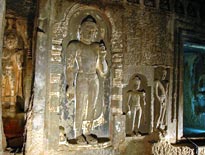
mental patterns of the people. As time progressed, the cruder forms were refined and a new kind of art form developed. This was the art form of rock cut caves and temple art. Rock cut art and architecture was a very important step taken towards the progress of ancient Indian art. The rock cut architecture was first initiated by the Buddhists and this inspired Hindus and the Jains who built similar structures at sites like Ajanta, Badami, Ellora, Elephanta, etc. The patterns varied according to different regions they were built in. The expression of mental attitudes in the form of ancient art is truly fascinating and helps us analyze the journey traveled from then to now.

